

Chicken Matchmaking
On the social lives of chickens, cock fighting, and the endless work of animal husbandry

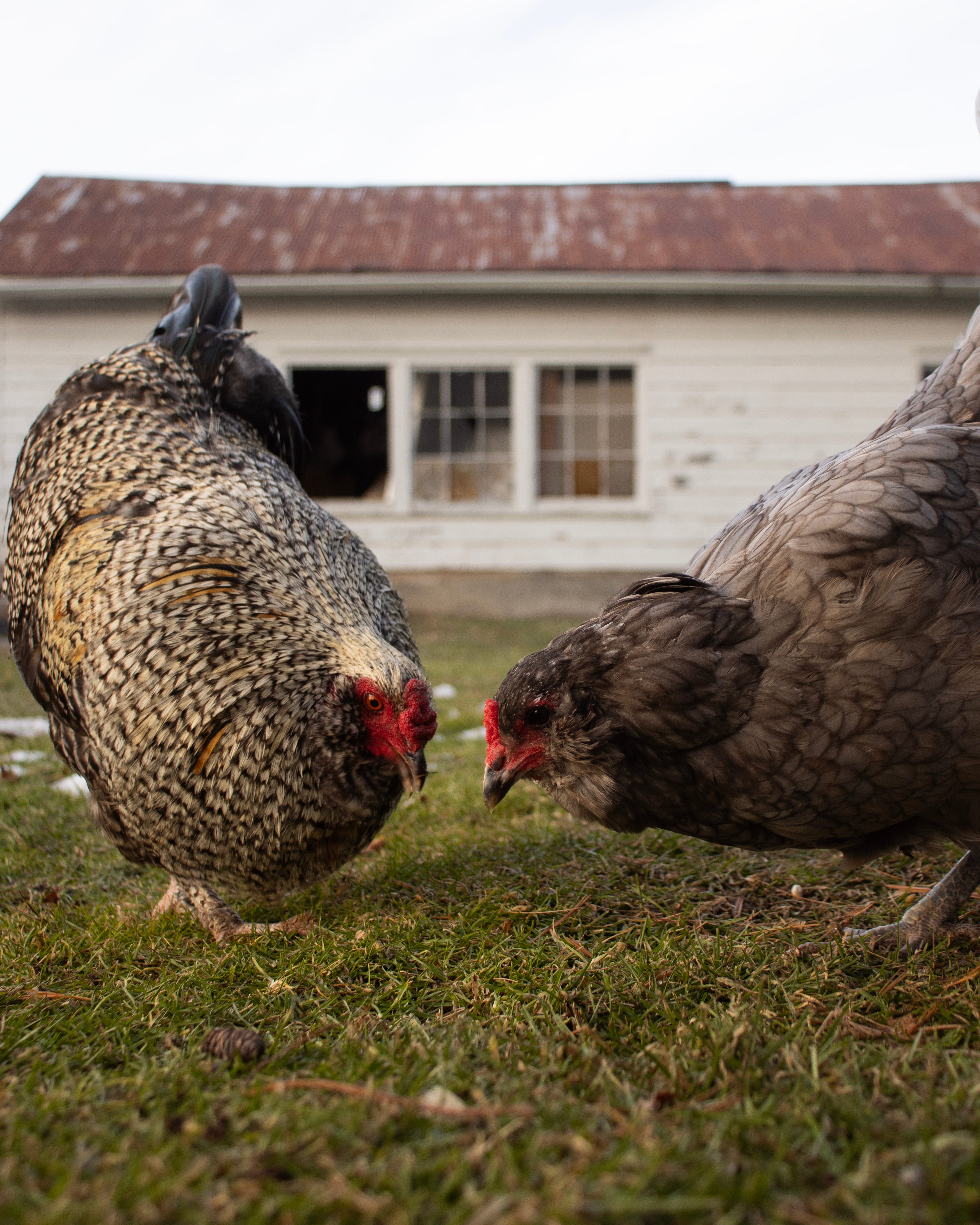
The Social Lives of Chickens
One of the quiet truths of keeping a flock is that chickens have far more complex social lives than most people imagine. They form hierarchies, friendships, rivalries, and alliances. They remember slights, offer comfort, and sometimes show surprising tenderness.
On our farm we try to honor that complexity. Good animal husbandry isn’t just clean water and quality feed; it’s paying attention to flock behavior, noticing when dynamics shift, and stepping in before stress becomes harm.
This past month, that meant matchmaking.
Rooster Ratios and Flock Dynamics
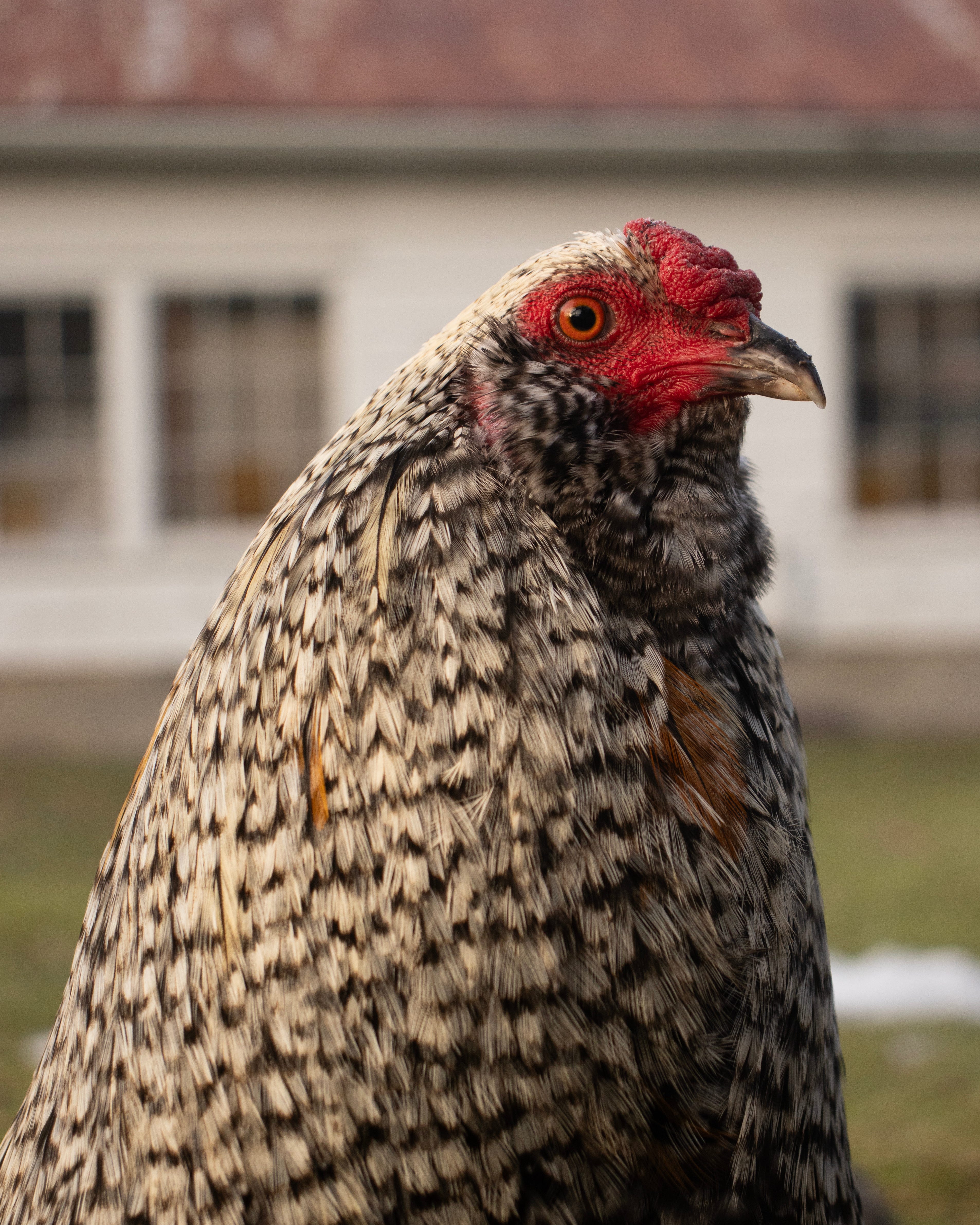
Despite ordering a batch of pullets this summer, we ended up with three roosters, a common surprise, even from reputable hatcheries. But three roosters and a small flock of hens don’t mix well. The recommended ratio is about one rooster for every ten hens. Too many roosters leads to challenges: stress on the hens, dominance struggles, and eventually, violence.
One morning during free-ranging, I found Orville, our big blonde Basque rooster, streaked with blood. Muffoletto was nowhere. When a rooster disappears after a fight, predators are your first fear. I checked the field, the crop of trees near the flower rows, and the thick raspberry bramble. Nothing.
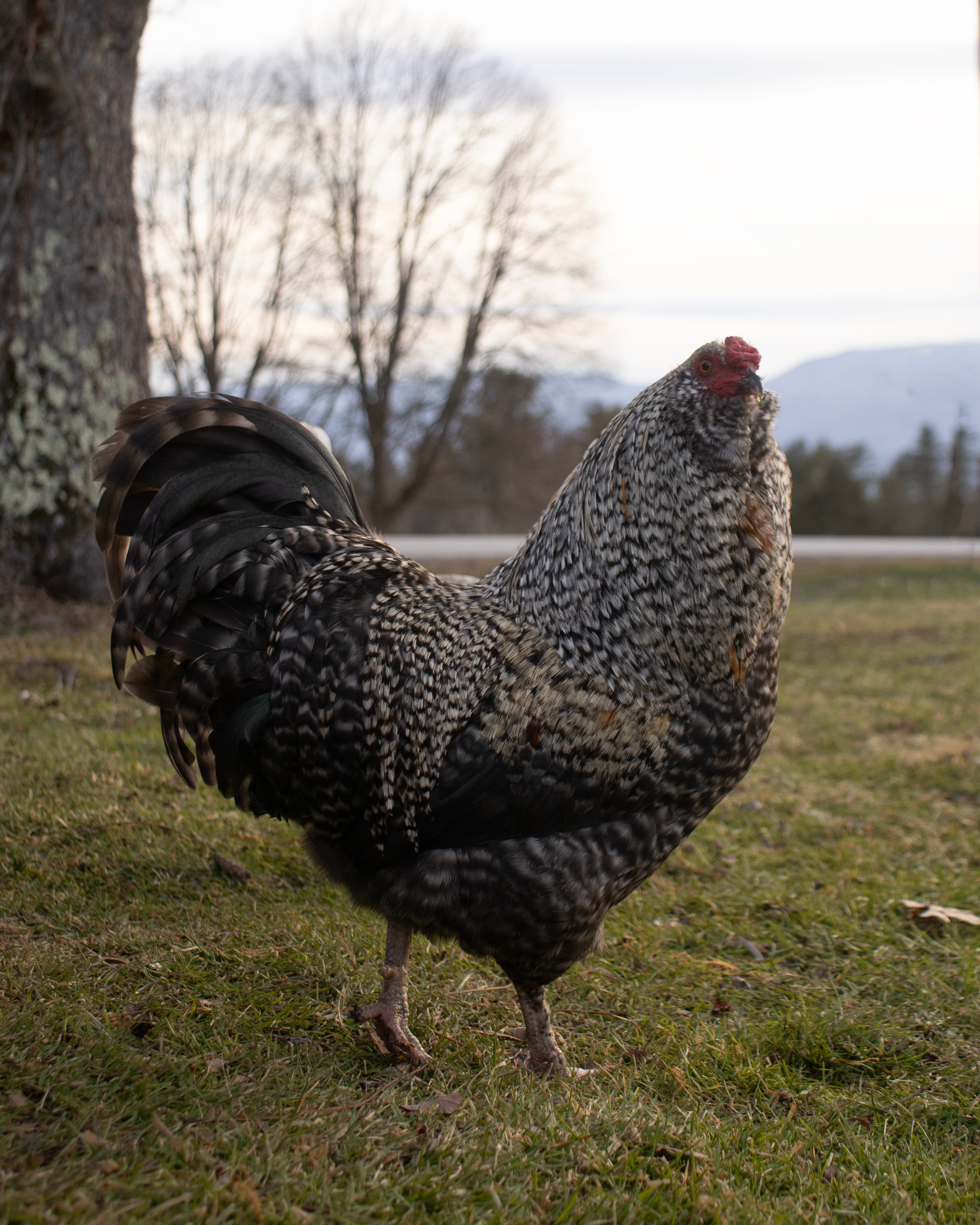
Then I heard a faint crow coming from the chinchilla coop, an old barn left by the previous owners. Muffoletto was inside, alive, but clearly defeated. Chickens show emotional distress more plainly than you’d expect. He stepped out with his head low, avoiding Orville and avoiding Chaat, our third rooster. In the strict world of flock hierarchy, he had been pushed out.


Responsible Backyard Flock Management
Many people allow flocks to “sort it out,” but that isn’t our approach here. We believe that if you choose to keep animals, you assume responsibility not only for their physical safety but also for their social wellbeing.
So that night Muffoletto slept in the mudroom while we talked through his options. Rehoming a rooster is notoriously difficult. Living in our mudroom wasn’t an option either.
And that’s when we thought of Splat.
Healing From Injury and Reintegration Challenges
Splat’s story is its own lesson in chicken resilience. This summer, after a weekend away, we found her with a deep neck injury, the skin peeled back, tendon exposed. We rushed her to the vet, treated and cleaned the wound, and moved her into our small coop for a six-week recovery.
She healed beautifully, but when it came time to reintegrate her, her flock rejected her, and she wanted revenge - Kill Bill style. Injured or vulnerable hens often lose their place in the pecking order, and reintroducing them almost guarantees a fight. She had been living alone ever since.
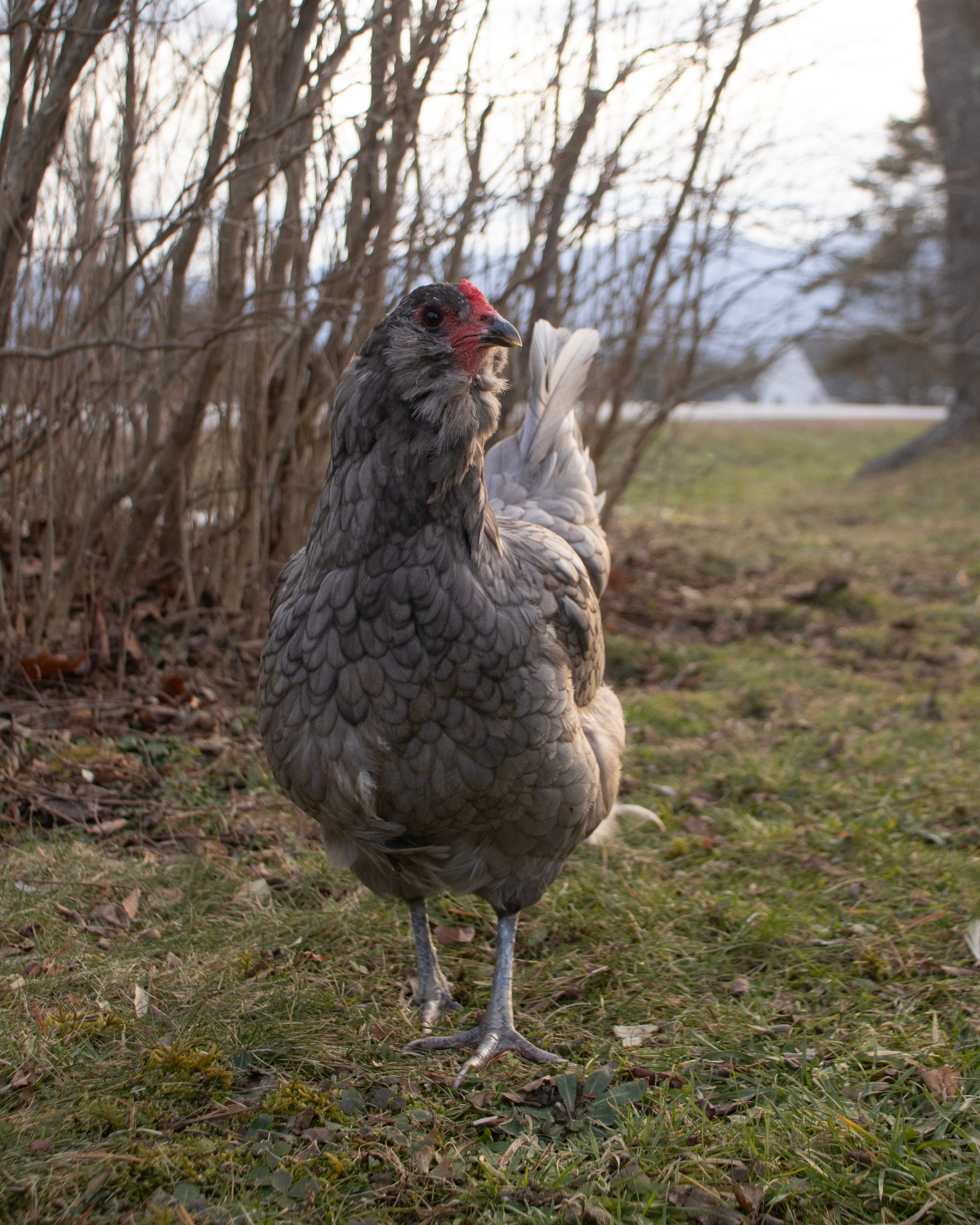
Introducing a Rooster and Hen to Form a New Mini-Flock
A rooster who’d lost his flock and a hen who could no longer return to hers made us wonder whether they might be the start of something new. A small, gentle flock of two.
We began slowly: joint free-ranging with plenty of space for distance interactions. Muffoletto tidbitted to her, little trills and offerings of imaginary food, saying, come closer. Splat watched from her run.
A Slow, Trust-Based Integration
One afternoon after letting the two free range, we found them together in her run, sharing a feeder. They both kept their distance. Unlike a more dominant rooster, Muff didn’t rush her or attempt mating. He was patient, deliberate, aware of her boundaries.
Then one evening he slipped into her coop. Splat roosted high; Muffoletto settled quietly on the rung below, respectful and calm. It felt exactly like the early stages of a relationship.
What This Says About Our Farm Values
This is the part of small-scale farming most people never hear about: the daily reading of animal behavior, the decisions shaped by care rather than convenience, the belief that if animals live in our stewardship, their social and emotional needs matter.
Sometimes flock management means adjusting ratios. Sometimes it means isolating a bird for medical care. And sometimes, unexpectedly, it means giving two outcasts the chance to build a life together.
Really thoughtfull approach to flock management. The slow integration between Muffoletto and Splat shows how much difference patience makes, most people would've just tossed them together and hoped for the best. Watched a neighbor lose two hens last year because they rushed reintroduction after an injury, the flock just demolished them. The detail about Muff roosting below Splat and respecting her boundries says a lot about reading individual animal behavior instead of just following ratios.
The social hierarchy is very reminiscent of how other groups of animals behave! It’s very interesting the lengths you have to go to, in order for them to be healthy!